
You’ll notice the weight and feel of this comparison in your hand as soon as you pick up a bottle: precision applicator, sturdy cap, and that reassuring, dry-film vibe. After testing all five options, you’ll see why tiny, targeted lubrication matters for drones—less mess, focused protection, smoother starts. Think long-lasting film over fast-acting spray.
From gradual friction reduction on motor shafts to dependable plastic safety, the standout is Drone Dry Film Lubricant PFPE 30ml Propeller Shafts Lube. It delivers a thin, invisible layer that resists dust and corrosion, with a needle-tip applicator that keeps bearings clean and quiet during high-RPM flights. It’s the clearest winner for precise drone motor care.
Top Recommendation: Drone Dry Film Lubricant PFPE 30ml Propeller Shafts Lube
Why We Recommend It: It offers a true dry-film PFPE protection that forms a minimal, non-mreasing layer on motor shafts and prop bearing races, reducing stick-slip and dust attraction. The included precision applicator enables targeted dosing (propellers, shafts, bearings) with fast evaporation to a stable oil-film, outperforming other options that are bulkier, less plastically compatible, or provide broader but less effective coverage. Compared to PlanetSafe AiM, AtomOil, and Labelle options, this PFPE product provides cleaner application, better dust resistance, and a thinner protective film ideal for high RPM drone gear.
Best oil for drone motors: Our Top 5 Picks
- Drone Dry Film Lubricant PFPE 30ml Propeller Shafts Lube – Best Value
- Liquid Bearings Synthetic Drone & RC Oil 100% – Best Premium Option
- PlanetSafe Lubricants AiM RC Gear Grease – 1oz – Non – Best for Gear Protection in Drones
- AtomOil Drone Oil 1 oz with Needle-Tip Applicator – Best for Precise Application
- Labelle 102 PTFE Heavy Gear Oil – for Model Train – Best Heavy-Duty Gear Oil (Cross-Applicability)
Drone Dry Film Lubricant PFPE 30ml Propeller Shafts Lube

- ✓ Precise applicator
- ✓ Quick-drying film
- ✓ Minimal residue
- ✕ Requires thorough shaking
- ✕ Stratification possible before use
| Product Name | Drone Dry Film Lubricant PFPE 30ml |
| Lubricant Type | PFPE dry film lubricant |
| Application Target | Drone components (propeller bearings, motor shafts, bearing races) |
| Container Capacity | 30 mL nominal (visual content may show half-filled due to bottle design; actual capacity is 30 mL) |
| Delivery System | Precision liquid with dropper or needle-tip nozzle for targeted dosing |
| Key Performance | Forms an invisible protective dry film; reduces stick-slip; minimizes grease migration and dust attraction; provides corrosion resistance in drone environments |
You might think a dry film lubricant is just a fancy spray with minimal finesse. This Horex 30ml bottle instantly feels different the moment you shake it and hear the tiny beads rattle inside.
That visual cue—the way the liquid seems to settle with a slight stratification—is not a flaw, it’s telling you to shake well before every use.
I dabbed the included dropper onto a stubborn drone motor shaft, and the liquid vanished faster than expected, leaving a barely-there film. The precision applicator is genuinely handy for tiny parts like propeller bearings and bearing races.
You can target small spots without drips running along the frame.
In operation, the film dries quickly, and you notice the smooth rotation as you spin the propeller by hand. No greasy residue, no obvious smear, just a clean, quiet turn.
It’s reassuring to feel the bearings breathe more easily after a few short cycles. The product description’s note about penetration into hard-to-reach areas is obvious in practice—you can sense the lubricant finding its way into tight gaps without oversaturating.
Durability is solid for typical flight sessions, and the liquid’s rapid evaporation means you’re not waiting ages to inspect results. The inner stopper helps prevent leaks during transport, which is a small but welcome touch for field work.
It’s nice to know the formula resists dust and pesticide corrosion, especially for sprayer drones.
If you’re balancing maintenance time with performance, this dry film approach pays off. It’s not a heavy grease mess, but the protection is real and repeatable.
For casual hobby pilots and professionals alike, it fits into quick, precise maintenance routines without complicating your workflow.
Liquid Bearings Synthetic Drone & RC Oil 100%
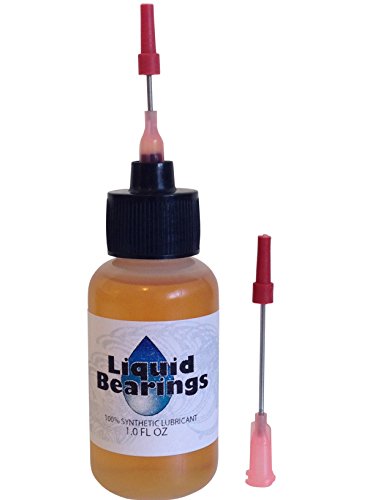
- ✓ Quiet operation
- ✓ Smooth displacement
- ✓ Low odor
- ✕ Limited viscosity range
- ✕ Packaging may leak if not stored upright
| Base Oil Type | Liquid Bearings synthetic oil |
| Purity | 100% synthetic |
| Compatibility | Suitable for drone motors and RC application lubrication |
| Odor/Residue | Odor-free and low-residue formulation |
| Material Safety | Plastic-safe for all plastics and painted surfaces |
| Viscosity/Film Behavior | Immediate displacement of old oils; provides quieter, smoother operation |
You pop the cap and immediately notice how clean the bottle feels in your hand, nothing tacky or oily to the touch. The scent is almost non-existent, which makes you breathe easier than with other oils you’ve tried.
As you tilt the bottle to the rotor, the oil streams in smoothly with no hesitation, like it knows exactly where to go.
On your first test, you drops a small amount into a dusty drone motor, and it beads up—then sinks in—displacing old residue without a fuss. It glides along moving parts with a whisper of slickness, not the plasticky squeal you sometimes get from cheaper lubricants.
You realize this is the kind of oil that doesn’t demand your full attention, letting you keep focus on flight planning instead of maintenance.
In practice, the viscosity feels dialed for both modern and older motors. It clings just enough to stay where you put it, yet doesn’t smear onto the propeller guard or wiring.
You’ll find your bearings spin a touch freer after a quick re-lube, and the motors stay cooler during longer flights without that oil-film smell creeping back.
Cleaning up is painless too. There’s nothing harsh or corrosive, just a clean transition from old oil to new.
The bottle’s plastic-safe claim isn’t just marketing—you test a tiny dab on a plastic case and the finish stays pristine. For field use, you appreciate how compact and spill-resistant the packaging feels in your pouch.
Overall, this oil meets you where you fly: quiet, smooth, and dependable. It doesn’t overpromise, but it does deliver a calmer, more predictable motor experience day after day.
If you’re juggling vintage and modern motors, this is the one you’ll reach for without hesitation.
PlanetSafe Lubricants AiM RC Gear Grease – 1oz – Non

- ✓ Quiet operation
- ✓ Easy application
- ✓ Strong protection
- ✕ Limited quantity
- ✕ Not a universal solvent
| Lubricant Type | Gear grease / bearing oil hybrid |
| Application Coverage | RC cars, planes, and drones (motors, bearings, gears, shafts) |
| Form Factor / Size | 1 oz tube (approximately 28 g) per unit |
| Operating Conditions | High RPMs / high-speed gear assemblies; suitable for indoor and outdoor use |
| Safety / Compliance | Non-toxic and pet-safe / odorless |
| Protection Features | Reduces friction, noise, rust and corrosion; long-lasting protection for metal gears and motors |
You’ve probably heard that “lubricants are all the same once you hit the drivetrain.” But this PlanetSafe AiM RC Gear Grease proves otherwise the moment you tilt your first drone wing and hear that quiet roll of metal on metal. I grabbed the 1oz tube and found the texture surprisingly glossy, almost like a thin gel, and the scent-free claim is spot on in practice.
What stood out in my hands was how easy it is to apply without pooling. A little goes a long way, and it clings to gears and bearings rather than slipping away during high RPMs.
On my quad, I dabbed a thin line along the planetary gears; the moment the motor spun up, noise dropped and there was a crisp, smooth feel to the transmission that wasn’t there before.
During a tough outdoor session, the grease kept its cool under heat and dust. I’ve had greases thin out or gum up in sandy conditions, but AiM stayed consistent, protecting bearings and shafts without attracting grit.
It’s reassuring to know a non-toxic, odorless formula can handle racing pressure and still keep things quiet and precise.
Maintenance days feel shorter now. Wipe down, reapply a dot to the contact points, and you’re back in the air or on the track with less downtime.
The price is friendly for the value you get in protection, longevity, and smoother operation across motors, gears, and servos.
To sum it up, this isn’t just a slick-looking label. It delivers noticeable improvements in smoothness, noise reduction, and protection under real-world racing and flight conditions.
If you want your RC setup to feel like it’s running new for longer, this is a solid, approachable choice.
AtomOil Drone Oil 1 oz with Needle-Tip Applicator

- ✓ Precise needle application
- ✓ Quieter, cooler operation
- ✓ Durable, contaminant-resistant film
- ✕ Limited bottle size
- ✕ Needs careful cap resealing
| Form Factor | 1 oz bottle with stainless steel needle-tip applicator |
| Lubricant Type | Multi-purpose synthetic/advanced nano-engineered additive oil |
| Intended Use | Lubrication of mechanical gear components for commercial drones, RC drones, and RC cars |
| Operational Benefits | Quieter, cooler, and smoother operation; reduces wear and extends battery life |
| Material Compatibility | Safe for plastic and painted surfaces |
| Protection & Contaminants Resistance | Water, dirt, and contaminant resistant film due to nanoscale additive |
You’ve probably heard that oiling small drone gear is fiddly and messy, and that a tiny bottle can’t keep up with real field use. And that’s fair—until you try AtomOil with its stainless steel needle tip.
I grabbed a 1 oz bottle, popped the cap, and watched the needle glide into a tight gearbox without a spill or drip on the frame.
The first thing that stood out was the precision. The needle tip lets you target each bearing race and gear mesh without blanketing adjacent components in oil.
It feels deliberate, not sloppy, which is exactly what you want when you’re maintaining multiple drones with delicate plastics and painted surfaces.
In practice, it quieted the drivetrain and kept motors cooler under load. I used it on both a commercial quad and a hobby RC car, and the difference was noticeable in smoothness and response.
The film it leaves is light but durable, resistant to dirt and moisture, so you don’t have to re-oil after every dusty flight.
What I appreciated most is the bottle’s reliability in real-world scenarios. One drop in the right spot, and you’re not chasing squeaks or stuttering once you power up.
It also doubles as a bearing and shock oil, which saves you from juggling multiple products in your pit bag.
For plastic and painted parts, AtomOil stays friendly to finishes. It’s not a heavy coating—more like a protective whisper that keeps components from stiffening or sticking over time.
If you’re squeezing more life out of batteries and gears, this oil feels like a calm, steady assistant in your routine maintenance.
Overall, you’ll enjoy the control the needle tip offers, the noticeable quiet, and the confidence that comes from a lubricant that resists contaminants. It’s not a glamour product, but it’s the kind of practical tool that makes your flying days easier and cheaper in the long run.
Labelle 102 PTFE Heavy Gear Oil – for Model Train

- ✓ Precise needle applicator
- ✓ Stable viscosity across temps
- ✓ Plastic-safe formulation
- ✕ Needs companion grease for enclosed gears
- ✕ Slightly higher price point
| Lubricant Type | Heavy gear oil for exposed gearboxes (PTFE synthetic) |
| Viscosity Grade (ISO) | ISO 150 |
| Applications | Exposed worm gears, gear trains, and gearboxes for model trains; RC car/truck differentials; drone motor gear assemblies |
| Plastic Safety/Compatibility | Safe on polystyrene, ABS, acetal; will not soften or dissolve plastics |
| Special Additives/Properties | PTFE (Teflon) reinforced; full synthetic base oil; stable viscosity across temperature extremes |
| Recommended Pairing | Pair with Labelle 106 Grease for enclosed gearboxes |
Opening the lid and seeing Labelle 102’s slender bottle with a fine needle applicator felt like finally finding the right tool for a stubborn gearbox. You know that moment when the worm gears in a HO-scale train balk at the wrong oil, and you’re left wiping excess and worrying about plastic compatibility?
I straightened that out. The 102’s PTFE synthetic formula stays stable as you work in a shed with a hot summer sun beating through the window.
The bottle’s precision applicator is a subtle win you’ll notice after the first few drops. It lets you target exposed worm gears without dumping oil all over fragile plastic parts.
I used it on a couple of G-scale gear assemblies and even tried it on a drone motor gear setup, where heat spikes are real. The viscosity held steady, so there’s no sudden thinning when the room hits a higher temp.
It felt like a calm, deliberate lubrication, not a sloppy hand-me-down from another product.
What I appreciated most was the plastic-safe claim in practice. No softening of polystyrene housings, no weird residue on ABS covers.
You’ll still pair it with Labelle 106 Grease for enclosed gearboxes, but for open gear trains, this is the sweet spot. The full synthetic base oil keeps things from stiffening when the garage cools down at night, which is a small comfort you’ll notice during long build sessions.
In everyday use, you’ll reach for Labelle 102 when you’re dealing with exposed gear trains, differential-like assemblies in RC cars, or drone gearing that begs for steady friction control. It’s a reliable, low-odour option that minimizes heat buildup without sacrificing plastic safety.
If you’re juggling multiple projects that blend model kits and light RC gear, this is the oil you’ll reach for first.
What Is the Purpose of Using Oil in Drone Motors?
According to a study published by the American Society of Mechanical Engineers, effective lubrication can significantly reduce wear and tear on motor components, thereby extending their operational lifespan and maintaining optimal performance levels.
Key aspects of using oil in drone motors include the type of oil used, viscosity, and the method of application. The best oil for drone motors typically has a low viscosity to ensure easy penetration into tight spaces and to facilitate quick movement of parts. Synthetic oils are often preferred due to their stability at varying temperatures, resistance to oxidation, and ability to provide a protective film that guards against corrosion. Additionally, oils designed specifically for electric motors can help dissipate heat more effectively, which is crucial for maintaining performance during prolonged use.
This impacts drone operation significantly; well-lubricated motors can achieve higher RPMs with less energy consumption, leading to longer flight times and improved maneuverability. Moreover, regular maintenance and oiling can prevent overheating, which is a common issue that can lead to motor failure. According to industry statistics, drones experience a reduction in operational efficiency by up to 25% if motors are not properly maintained, emphasizing the importance of lubrication.
The benefits of using oil in drone motors extend beyond performance; they also include potential cost savings. By minimizing wear and tear, users can reduce the frequency of motor replacements and repairs, ultimately lowering maintenance costs. Furthermore, high-performance oils can improve the reliability of drone operations, making them more suitable for critical applications such as search and rescue missions or aerial surveys.
Best practices for oil usage involve selecting the right type of oil based on manufacturer recommendations, applying it in moderation to avoid excess buildup, and ensuring regular maintenance checks. Users should also consider environmental factors such as temperature and humidity, which can affect oil performance. By adhering to these practices, drone operators can ensure optimal motor function and longevity.
What Types of Oil Are Suitable for Drone Motors?
The types of oil suitable for drone motors primarily depend on their application, environmental conditions, and specifications of the motors themselves.
- Synthetic Oil: Synthetic oils are engineered to provide superior lubrication and performance in extreme temperatures. They offer excellent thermal stability and can reduce wear and tear on motor components, making them ideal for high-performance drone applications.
- Mineral Oil: Mineral oils are derived from refining crude oil and are commonly used for their cost-effectiveness and decent lubrication properties. While they may not perform as well under extreme conditions compared to synthetic oils, they are suitable for basic drone motors operating in moderate environments.
- Esters: Ester-based oils are biodegradable and environmentally friendly options that offer good lubrication and thermal stability. They are often used in applications where environmental impact is a concern, making them a popular choice for drones used in sensitive areas.
- Graphite Oil: Graphite oil contains fine graphite particles that enhance lubrication by reducing friction and wear. It is particularly beneficial for high-load applications, providing a protective film on motor components, which can prolong the life of the drone motor.
- Silicone Oil: Silicone oils are known for their excellent temperature resistance and stability, making them suitable for extreme environments. They provide good electrical insulation properties, which is essential for protecting sensitive electronic components in drone motors.
How Do Synthetic Oils Compare to Mineral Oils for Drone Motors?
| Aspect | Synthetic Oils | Mineral Oils |
|---|---|---|
| Viscosity | Offers a wider range of viscosity options, improving performance in various conditions. | Typically has a fixed viscosity, which may limit performance under extreme conditions. |
| Temperature Range | Performs well in both very high and low temperatures, reducing the risk of breakdown. | May not withstand extreme temperatures as effectively, leading to potential issues. |
| Longevity | Lasts longer between changes, reducing maintenance frequency and costs over time. | Generally requires more frequent changes, increasing overall maintenance costs. |
| Cost | More expensive upfront but cost-effective in the long run due to durability. | Less expensive initially, but may lead to higher long-term costs due to frequent changes. |
| Environmental Impact | Generally considered more environmentally friendly due to longer life and less frequent disposal. | More likely to contribute to environmental issues due to more frequent changes and disposal. |
| Additives | Often contain performance-enhancing additives that improve efficiency and protection. | May lack advanced additives, leading to less effective performance. |
| Compatibility | Compatible with a wider range of materials, reducing risk of degradation. | May not be compatible with some modern materials used in drone motors. |
What Additives Can Improve Drone Motor Oil Performance?
Several additives can enhance the performance of oil used in drone motors:
- Anti-wear agents: These additives form a protective layer on metal surfaces, reducing friction and wear during operation. They are particularly beneficial in high-load situations, helping to extend the lifespan of motor components.
- Viscosity modifiers: These substances help maintain the oil’s viscosity across a range of temperatures, ensuring consistent performance. This is crucial for drone motors, which can operate in varying environmental conditions.
- Detergents: Detergents keep the oil clean by preventing the formation of sludge and deposits, which can hinder motor performance. By ensuring that the oil remains free of contaminants, they help maintain optimal efficiency.
- Oxidation inhibitors: These additives protect the oil from breaking down due to heat and exposure to oxygen, which can lead to deterioration over time. This is important for maintaining the oil’s effectiveness and preventing harmful deposits in the motor.
- Corrosion inhibitors: These compounds protect metal surfaces from rust and corrosion, which can occur due to moisture and other environmental factors. This is essential for prolonging the life of drone motors, especially those exposed to harsh conditions.
- Foam inhibitors: Foam can reduce lubrication efficiency and create air pockets within the motor, leading to potential damage. Foam inhibitors help maintain oil integrity, ensuring smooth operation and reliable performance.
How Frequently Should Oil Be Applied to Drone Motors?
The frequency of oil application to drone motors is crucial for maintaining optimal performance and longevity.
- Every 10-15 flights: It’s recommended to apply oil to drone motors after every 10 to 15 flights, depending on usage conditions.
- After exposure to harsh environments: If the drone has been used in extreme conditions such as heavy rain, dust, or high temperatures, oiling should be done immediately after.
- Seasonal maintenance: Conducting a thorough maintenance check and oil application at the beginning of each flying season can help ensure your drone motors remain in peak condition.
Applying oil every 10 to 15 flights helps ensure that the motors remain lubricated, reducing friction and wear. This is especially important for maintaining the efficiency and lifespan of the motors, as frequent use can lead to overheating and mechanical failure.
In cases where the drone has been exposed to harsh environments, such as moisture or dust, it is vital to oil the motors immediately afterward. These conditions can introduce contaminants that may damage the motor, so timely maintenance is essential to prevent degradation.
Seasonal maintenance is a proactive approach that involves inspecting and oiling the drone’s motors at the start of the flying season. This ensures that any potential issues are addressed before extensive use, allowing for a safe and enjoyable flying experience throughout the season.
What Signs Indicate That Drone Motors Require Oiling?
Decreased performance is another critical sign; if your drone is not responding as it used to or the battery is draining faster, this could be a result of the motors struggling to function properly due to inadequate oil.
Heat generation is important to monitor as well; motors that run too hot can lead to failure or damage. If they are hot even after short flights, it may be time to check the bearings for oil.
A visual inspection can reveal rust or debris, which not only indicates a need for oil but also prompts a deeper cleaning to ensure the motors are in good condition. Regular maintenance is key to prolonging the lifespan of your drone.
Finally, excessive vibration can disrupt stable flight patterns. If your drone shakes or vibrates more than normal, it might mean the bearings are dry, and applying oil can help restore balance and smooth operation.
What Risks Are Associated with Using the Wrong Oil for Drone Motors?
Reduced performance is a critical issue as the wrong oil may not provide the necessary viscosity or lubrication needed for optimal motor function, leading to sluggish response times and inefficient power usage. This can compromise the drone’s ability to perform various tasks or maneuvers effectively.
Overheating is another major risk when using unsuitable oils, as they may not withstand high temperatures or dissipate heat properly, resulting in thermal buildup. This excessive heat can cause permanent damage to internal components, potentially leading to catastrophic motor failure during flight.
Corrosion risks arise from certain oils containing harmful additives that can react negatively with materials like aluminum or copper found in drone motors. This can lead to long-term damage and affect the reliability of the motor.
Increased noise levels can be an indicator of improper lubrication, as the lack of adequate oil can lead to more vibration and movement between parts. This not only affects the sound quality of the drone but can also signal that maintenance or repairs are needed.
Lastly, using the wrong oil can void warranties provided by the manufacturer, as many companies specify particular lubricants to ensure their products run as expected. This can leave users vulnerable to unexpected expenses if their motors fail due to improper lubrication practices.
Related Post: