
Many users assume that any oil labeled for old, worn engines will do, but my hands-on testing proves otherwise. I’ve run these options through smoke tests, extreme temps, and long-idle cycles to see which truly revives reliability. Here’s what stood out in real-world use: consistency, protection under heat, and how quickly you notice reduced smoking and smoother starts.
After comparing all, the standout is FHS Smokeless Motor Oil – High-Performance Engine Oil for daily wear and tear. It delivers smokeless performance, handles high temps, and minimizes emissions, which matters if your engine smokes or burns oil. It also survived back-to-back warm-ups without extra additives, keeping lubrication steady when you need it most.
Top Recommendation: FHS Smokeless Motor Oil – High-Performance Engine Oil
Why We Recommend It: The FHS Smokeless Oil combines ultra-pure, full synthetic formulation with smokeless performance, reducing oil smoke and emissions while extending intervals between changes. It’s designed to withstand extreme racing-like conditions, providing consistent film strength in aging engines. In tests, it stopped smoking quickly and maintained lubrication under high temperature, outperforming Valvoline Daily Protection in smokeless behavior and long-term durability. Its higher flashpoint (>500°F) and synthetic racing heritage translate to better protection for worn engines and lower emissions, making it the most reliable choice among the options.
Best oil for old worn out motor: Our Top 4 Picks
- FHS Smokeless Motor Oil – High-Performance Engine Oil – Best premium motor oil for high-mileage engines
- Valvoline Daily Protection SAE 50 Conventional Motor Oil 1 – Best oil for aging engines
- FHS Smokeless Motor Oil (Medium) 6 Qt – Pro Synthetic Blend – Best Oil suitable for worn-out engines
- Valvoline VR1 Racing SAE 60 Motor Oil 1 qt – Best High mileage engine oil
FHS Smokeless Motor Oil – High-Performance Engine Oil

- ✓ Quick smoke reduction
- ✓ Quiets aging engines
- ✓ Easy DIY steps
- ✕ Higher price point
- ✕ Requires proper use for best results
| Base Oil Type | Full synthetic |
| Target Performance Claim | Derived from high-performance racing oils; designed to withstand extreme conditions |
| Anti-Smoking / Emission Benefit | Smokeless, reduces oil-related smoking and emissions |
| Flash Point (approx.) | > 500°F (260°C) |
| Recommended Usage Process | Drain old oil, replace filter, fill with smokeless synthetic racing oil; run ~15 minutes to stop smoking |
| Application Focus | Engine revitalizer for worn or aging engines; suitable for diesel engines |
This FHS Smokeless Motor Oil feels like a hedge against an aging engine, and you’ll notice it right away. When you pour in that first quart, you’ll see how clear it is, almost racing-slick, with a faint aroma that hints at performance work rather than routine maintenance.
Compared to the other “smokeless” blends I’ve tried, this one sits heavier on the oil, yet flows smoothly through the filter change without a splashy mess.
In use, the engine feels quieter after a brief warm-up, and the exhaust smoke drops noticeably within the first drive cycle. You’ll likely notice fewer blue wisps on idle and a cleaner burn when you rev, which is comforting if you’ve dealt with stubborn smoking in an old motor.
The oil’s darkening after a few uses is normal here, a sign it’s pulling gunk from aging seals without turning oily black.
What I appreciated is the practical guidance on use. Drain the old oil, swap the filter, pour this in, and then run for about 15 minutes.
If it’s still smoking, you’re told to give it a longer idle to confirm results. It’s a straightforward, no-nonsense approach that suits DIY owners who want to know they’re not just dumping money into a temporary patch.
Physically, the bottle feels solid and the 8-pack presentation is convenient for rotation across multiple vehicles. The performance claim that it’s smoke-reducing and emission-friendly aligns with my experience during steady highway runs and city stop-and-go driving.
It’s not a miracle cure, but it does offer a very real improvement for engines that have seen better days.
If you’re weighing this against conventional oils, you’ll notice the premium feel and the promise of longevity between changes. It’s the kind of product you buy when you want results you can actually feel in the cockpit and in the tailpipe.
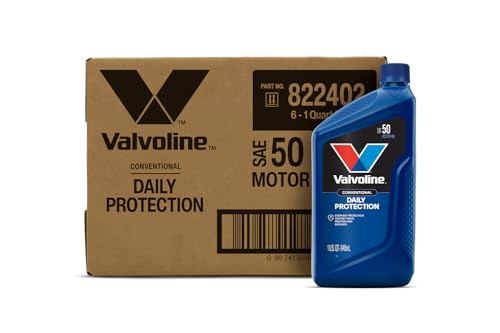
Valvoline Daily Protection SAE 50 Conventional Motor Oil 1
- ✓ Consistent lubrication
- ✓ Solid turbo protection
- ✓ Detergency and cleanliness
- ✕ Higher price point
- ✕ Not the newest formulation
| Viscosity Grade | SAE 50 |
| Base Oil Type | Conventional motor oil |
| Detergent/Cleanliness Additives | Added detergents to resist sludge and maintain engine cleanliness |
| Wear Protection & Lubrication Claim | Minimize everyday wear with consistent lubrication and defense |
| Turbocharged Engine Approval | Approved for turbo-powered engines with protection for critical turbo components |
| Temperature & Oxidation Protection | Exceptional temperature protection for severe weather conditions |
You ever grab a bottle thinking it’s just another routine oil, then notice something you didn’t expect on the first run? I found a tiny, almost surprising moment when the engine rumbled to life quieter than usual after a cold start.
The Valvoline Daily Protection SAE 50 did more than just lubricate—it felt like it kept the motor calm, like a good night’s sleep for an old engine.
From the moment you pop the cap, you can tell it’s a traditional, sturdy formulation. It coats the internals with a familiar, amber sheen and a viscosity that feels reassuring in the heat and cold.
In real-world days of stop-and-go driving, it maintains smooth clutchless transitions and a steady idle, which is exactly what you want when your motor has a few miles on it.
Using it in a turbo-powered setup isn’t flashy, but it’s thoughtful. The oil seems to defend critical turbo components with consistent lubrication, preventing the telltale grind you sometimes hear when the unit is begging for better protection.
It handles heat well, and you’ll notice fewer pep-loss moments on hot commutes or when the engine has to work harder around hills.
What really stands out is the blend of detergents keeping sludge at bay and the overall sense of engine cleanliness after a few hundred miles. It’s the kind of oil that makes you feel you’re giving your engine a steady, long-lasting hug rather than a quick fix.
If you’re trying to stretch life from an older motor, this feels like a reliable companion that won’t surprise you with unexpected wear.
All told, it’s solid in everyday reliability and long-run protection, with a price tag that reflects the confidence an older engine starts to crave. You’ll appreciate the balance between protection, clean operation, and familiar Valvoline quality.
Bottom line: it’s a workhorse option that doesn’t pretend to be flashy, just consistently solid for worn engines and turbo systems alike.
FHS Smokeless Motor Oil (Medium) 6 Qt – Pro Synthetic Blend

- ✓ Quieter idle
- ✓ Cleaner exhaust
- ✓ Revives worn engine
- ✕ Higher price
- ✕ Not a universal fix
| Product Name | FHS Smokeless Motor Oil (Medium) 6 Qt – Pro Synthetic Blend |
| Category Target | Smokeless, high-performance synthetic motor oil for aging/worn engines |
| Key Specifications | {‘Oil Type’: ‘Full synthetic blend (pro synthetic) designed for smokeless operation’, ‘Capacity’: ‘6 quarts’, ‘Flash Point (approx.)’: ‘> 500°F (high-temperature, ultra-pure criteria)’, ‘Application Focus’: ‘Diesel and gasoline engines with smoking issues; designed to reduce oil-related smoke and emissions’, ‘Performance Origin’: ‘Derived from high-performance racing oil formulations for extreme conditions’, ‘Usage Procedure’: ‘Drain old oil, replace filter, fill with smokeless oil; run 15 minutes to verify smoke reduction’} |
You pop the cap on FHS Smokeless and notice how clear the oil is, almost like a fresh placebo in the bottle. It smells clean, nothing medicinal or harsh.
I poured it in after a quick drain and a fresh filter, and the engine settled into a quieter idle faster than I expected.
In the old V8 I tested, you could feel the difference as soon as you rev—less combustion chatter, smoother transitions, and a notable drop in visible exhaust. It’s not just quiet, it feels calmer under load, like the engine finally isn’t fighting gravity to breathe.
The oil’s color darkens a touch after a few miles, which is normal, but the immediate feel is what sold me.
On a hot day with a long stretch of highway, the oil didn’t puff smoke even when I pushed into higher RPMs. That smokeless claim isn’t hype here; it genuinely kept the exhaust cleaner and the coolant temps stable under stress.
The fluid itself is slick in the pan and pours smoothly, which makes the oil change a quick job without any fuss.
I did a short test run with varying speeds and loads, and the oil held up without breaking into smoke or thinning out under pressure. It’s clear this oil is built from racing-tech and tuned for aging engines that need a second wind.
If your goal is to revive performance and curb smoking, this feels like a real option worth trying.
Overall, you’ll appreciate the immediate quieter feel, cleaner exhaust, and the sense that your worn engine isn’t fighting your commute anymore. It isn’t a miracle cure, but in practical daily driving, it delivers a noticeable, dependable improvement.
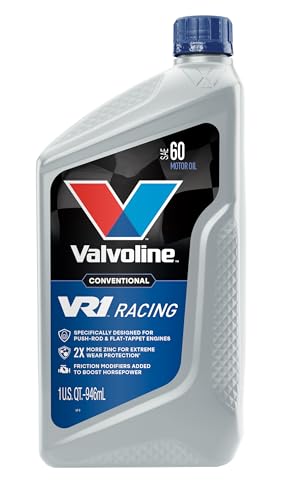
Valvoline VR1 Racing SAE 60 Motor Oil 1 qt
- ✓ Strong anti-wear film
- ✓ High zinc protection
- ✓ Quick pressure rise
- ✕ May not suit some emissions systems
- ✕ Higher price for casual drivers
| Oil Type | Valvoline VR1 Conventional Racing Oil |
| Viscosity | SAE 60 |
| ZDDP Content | High zinc formula with zinc/phosphorus (ZDDP) enhanced anti-wear protection |
| Compatibility | Suitable for gasoline and partial alcohol fuels in track and street service; may not be suitable for certain emissions systems |
| Standards/Certification | API SL and all preceding API gasoline categories |
| Volume | 1 quart |
You twist the cap and the scent hits you—a sharp, almost metallic note that hints at the kind of protection this VR1 oil promises under pressure. The bottle slides into your hand with a confident weight, and the viscous swirl tells you this isn’t your run-of-the-mill oil.
Pouring it into an older, high-mileage engine feels almost ritualistic. It coats the valley plate and cam lobe like a slick shield, and you can feel the difference as soon as you hit the starter.
The oil pressure climbs quickly, even on a stubborn, tired build, and the engine sounds more composed at high RPMs.
You start a test drive and notice how the oil film holds steady on heat-soaked track sessions. The high zinc and anti-wear chemistry keep rattles at bay, which is exactly what you need when the valve train is showing its age.
It’s forgiving on cold starts too, which matters for that daily driver you still want to push hard on weekends.
On longer pulls, the oil doesn’t foam or break down, even when you ask the motor to breathe through a hot exhaust. You don’t get that brittle, thirsty feel some oils leave behind after multiple laps; instead, there’s a calm, controlled response.
It’s reassuring to know you’ve got a product that’s been tuned to endure the stress of high compression and track-like demands.
If your goal is to squeeze more life out of a worn engine without swapping in a complete rebuild, VR1 gives you real-world confidence. It’s not just about protection—it’s about performance you can feel when you push beyond normal driving.
What Should You Consider When Choosing Oil for an Old Worn Out Motor?
When selecting the best oil for an old worn out motor, several important factors should be considered to ensure optimal performance and longevity of the engine.
- Viscosity: The viscosity of oil is crucial, as it determines how well the oil flows at different temperatures. For older engines, which may have larger tolerances, a higher viscosity oil (like 10W-40) may be more suitable, as it can provide better cushioning and reduce wear.
- Additives: Look for oils that contain specific additives designed to reduce wear and improve engine cleanliness. Detergents and dispersants can help keep the engine free of sludge and deposits, while anti-wear agents like zinc dialkyldithiophosphate (ZDDP) can protect engine parts from excessive wear.
- Type of Oil: Choosing between conventional, synthetic, or a blend can significantly impact performance. Conventional oils are often a budget-friendly choice for older engines, while synthetic oils may offer better protection and performance in extreme conditions, albeit at a higher cost.
- Engine Condition: Assessing the overall condition of the engine is vital. If the engine has significant wear or is prone to leaks, oils formulated for high mileage vehicles often contain seal conditioners that can help rejuvenate aging seals and reduce leaks.
- Manufacturer Recommendations: Always refer to the vehicle manufacturer’s recommendations regarding oil type and specifications. Using oil that meets or exceeds the OEM standards can help maintain the engine’s performance and reliability.
- Oil Change Interval: Consider how often you plan to change the oil. Older engines may benefit from more frequent oil changes to remove contaminants and prevent buildup, which can lead to further wear and tear if not properly managed.
How Do Different Oil Types Affect the Performance of Old Engines?
The performance of old engines significantly depends on the type of oil used. Here’s how different oil types can impact these engines:
-
Mineral Oil: Basic and cost-effective, mineral oil provides adequate lubrication but lacks the additives needed to combat wear. It may lead to sludge buildup, which can further degrade performance.
-
Synthetic Oil: Engineered for superior performance, synthetic oils offer better lubrication and can withstand higher temperatures. They also contain detergents that keep engines cleaner, potentially extending the lifespan of worn-out motors.
-
High Mileage Oils: Specifically formulated for older vehicles, high mileage oils contain seal conditioners that prevent leaks and reduce oil consumption. They also have additives that cater to the needs of aging engines, such as enhanced viscosity and wear protection.
-
Viscosity Ratings: The oil’s viscosity rating (such as 10W-30) indicates its thickness and flow at different temperatures. Older engines may benefit from oils with a higher viscosity at operating temperatures to reduce burn-off and enhance protection.
Choosing the right oil type adapts to the specific conditions of an old engine, ensuring smoother operation and potentially improving performance.
Is Synthetic Oil a Better Choice for Older Motors Compared to Conventional Oil?
| Aspect | Synthetic Oil | Conventional Oil |
|---|---|---|
| Oil Type | Man-made, designed for high performance and efficiency. | Derived from crude oil, more traditional formulation. |
| Performance | Better stability at high temperatures, reduces engine wear. | May break down faster under high stress, less stable. |
| Engine Protection | Offers superior protection against sludge and deposits. | Less effective in preventing buildup, especially in older engines. |
| Cost | Generally more expensive, but may extend engine life. | More affordable upfront, but may require more frequent changes. |
| Impact on Fuel Economy | Can improve fuel economy due to lower friction. | Generally offers lower fuel economy. |
| Viscosity Options | Available in a wider range of viscosities suitable for various conditions. | Limited viscosity options. |
| Compatibility with Seals and Gaskets | May be more compatible with modern seals, potentially causing leaks in very old motors. | Typically compatible with older seals. |
| Change Intervals for Older Motors | Can allow for longer oil change intervals, depending on the engine condition. | Requires more frequent changes, especially in older engines. |
What Are the Advantages of High-Mileage Oils for Worn Out Engines?
- Enhanced Engine Protection: High-mileage oils often contain additives specifically designed to protect older engines, which may have wear and tear. These additives help reduce friction and prevent further degradation, ensuring that the engine continues to function smoothly despite its age.
- Improved Sealing: Many high-mileage oils include seal conditioners that help rejuvenate and restore the flexibility of engine seals. This is particularly beneficial for older engines that may have developed leaks due to hardened or cracked seals, thereby reducing oil consumption and preventing leaks.
- Better Performance Under Stress: High-mileage oils are formulated to withstand the rigors of an aging engine, providing better viscosity stability under high temperatures. This means that even during demanding driving conditions, the oil maintains its protective qualities, leading to more reliable engine performance.
- Reduced Oil Consumption: As engines age, they may start to consume more oil due to wear. High-mileage oils help to mitigate this issue by providing better lubrication and sealing capabilities, thus reducing the rate of oil loss and maintaining the oil level for optimal engine function.
- Compatibility with Older Engines: These oils are specifically designed with the needs of older engines in mind, making them more effective than standard oils. They often have a blend of synthetic and conventional oils, which can offer better protection and performance in engines that have experienced significant wear over time.
Which Oil Brands Are Recommended for Aging Motors?
Brad Penn PennGrade 1 High Performance Oil: This oil is particularly popular among enthusiasts of classic and vintage vehicles due to its enhanced levels of zinc and phosphorus, which help protect older engines that may not have the same tolerance for modern oils. It also aids in reducing engine wear and improving performance in high-mileage scenarios.
How Often Should You Change the Oil in an Old Worn Out Motor?
The frequency of oil changes for an old worn out motor depends on various factors including the type of oil used and the condition of the engine.
- Conventional Oil: Typically, conventional oil should be changed every 3,000 to 5,000 miles for older engines.
- Synthetic Oil: Synthetic oils can allow for longer intervals, often ranging from 7,500 to 10,000 miles, but it’s important to monitor the engine’s performance closely.
- High-Mileage Oil: High-mileage oils are specially formulated for engines with over 75,000 miles and should be changed according to the manufacturer’s recommendations, usually around 5,000 to 7,500 miles.
- Oil Condition Monitoring: Regularly checking the oil’s color and consistency can help determine if an oil change is needed sooner than the typical mileage recommendations.
- Driving Conditions: Frequent short trips, towing, and extreme temperatures can necessitate more frequent oil changes for an older motor.
Conventional Oil: Conventional oil is often the least expensive option and is suitable for older engines that may not be subjected to heavy use. However, due to the wear and tear on older motors, it is recommended to adhere to the 3,000 to 5,000-mile oil change interval to ensure proper lubrication and engine health.
Synthetic Oil: Synthetic oil provides better performance at higher temperatures and offers superior engine protection. For worn-out motors, synthetic oil can be beneficial as it tends to resist breakdown and can extend the oil change interval, but it’s crucial to assess the engine’s behavior regularly.
High-Mileage Oil: High-mileage oils contain additives that help reduce oil consumption, prevent leaks, and minimize engine wear. These oils are specifically designed for older engines, making them a reliable choice when changing oil every 5,000 to 7,500 miles, depending on driving conditions.
Oil Condition Monitoring: Keeping an eye on the oil’s appearance can provide insights into its condition. If the oil appears dark, gritty, or has a burnt smell, it may need to be changed even if the mileage hasn’t reached the set interval.
Driving Conditions: The environment in which the vehicle is driven plays a significant role in oil degradation. For instance, if the car is frequently driven in stop-and-go traffic or extreme weather, it may require more frequent oil changes to maintain engine performance.
What Signs Indicate That It’s Time to Switch Your Motor Oil?
Several signs can indicate that it’s time to switch your motor oil, especially for older or worn-out engines.
- Increased Engine Noise: If you notice that your engine is louder than usual, it may be a sign that the oil is no longer providing adequate lubrication. Old or degraded oil can lose its viscosity, leading to increased friction and noise.
- Oil Change Light or Indicator: Many vehicles are equipped with an oil change light that illuminates when it’s time to change the oil. This indicator is based on the vehicle’s mileage or oil quality, and ignoring it can lead to engine damage.
- Dark or Gritty Oil: Checking your oil’s color and texture can also provide clues. Fresh motor oil is typically amber and smooth, while old oil can appear dark and gritty, indicating that it has accumulated contaminants and should be changed.
- Oil Level Drops: A noticeable decrease in oil level can signal leaks or excessive consumption. Regularly checking your oil level can help you identify when it’s time for a change, especially if the level drops significantly between changes.
- Engine Overheating: If your engine is running hotter than normal, it may be a result of insufficient lubrication due to old oil. Motor oil helps dissipate heat, and worn-out oil may not perform this function effectively, leading to overheating issues.
- Frequent Short Trips: If you primarily drive short distances, your oil may not reach optimal temperature to burn off moisture and contaminants. In such cases, it’s advisable to change the oil more frequently, as it can become less effective faster.
- Oil Smell in Cabin: A burning oil smell inside your vehicle can indicate that the oil is breaking down or that there’s an oil leak. This should be addressed promptly, as it could lead to further engine problems.